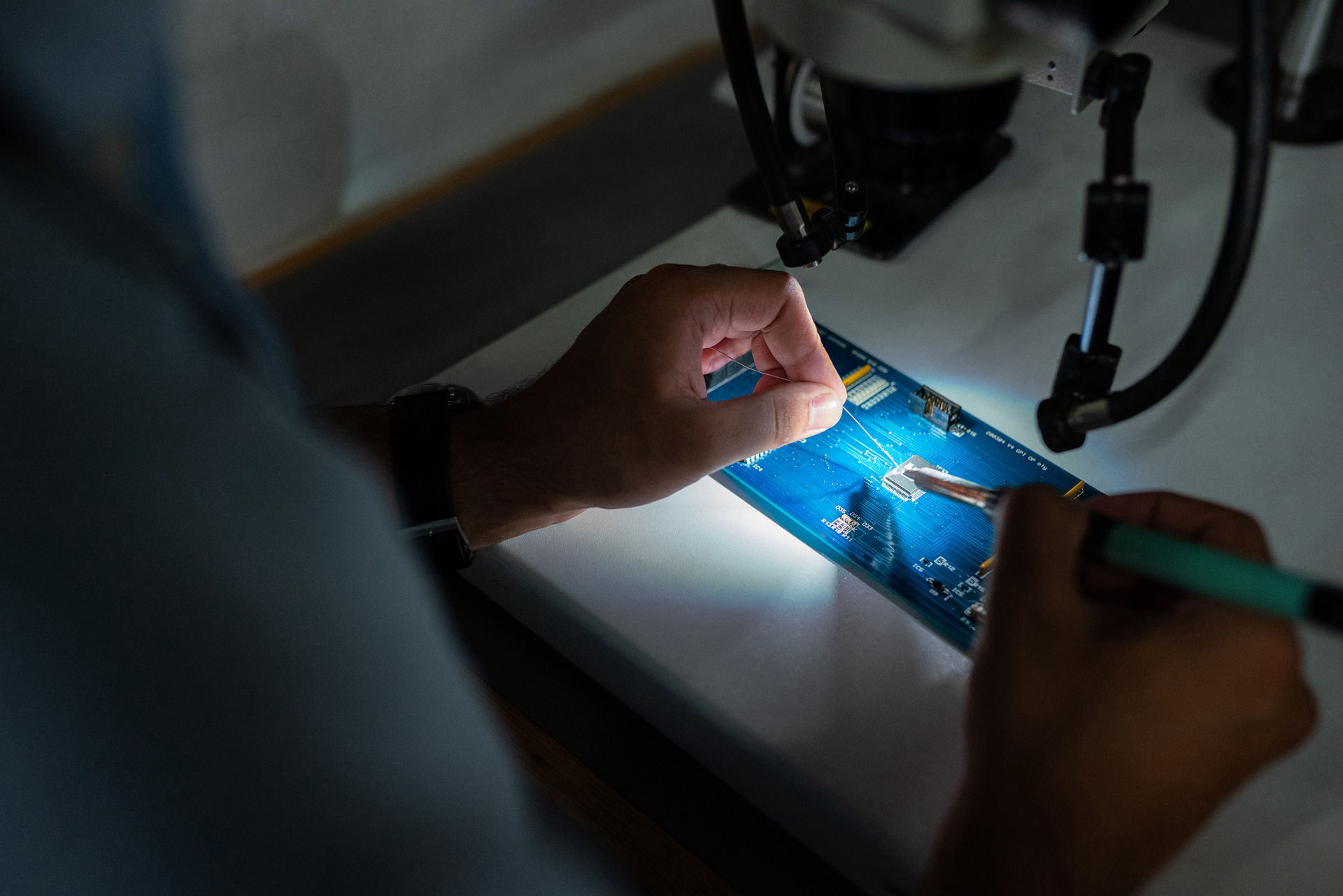
Domestic Chip Design And Manufacturing

Local computer enterprises purchase designs and equipment from Chinese OEMs and ODMs and sell them at a lower price than international corporations, making computers much more affordable for citizens in the face of a depreciating Turkish Lira and high taxes;

Thanks to the Turkish Government, people who couldn't afford electronics before can now work and study from home with government-subsidized electronics.

- Raising Awareness
- Education
- Platform Decision
- Public Acceptance
- Mass Adoption

- Students
- Educators
- Engineers
- Local Community
- Electronic Firms
- Advertisers

- Enthusiasm & initiative
- Years of research
- Investments
- Education
- Natural resources (i.e. silicon, gold, platinum)
- Mass adoption of technologies

Mobirise

Image from Mobirise Royalty Free Library

Proposed Solution

   To minimize reliance on foreign technology and avoid being affected by overseas pricing, regulations, and potential sanctions, I believe the optimum solution is to begin producing homegrown chips and processors. This is has been done by China, as they had recently been affected by the sanctions imposed by the United States (Huang 2021). The Chinese government has no access to U.S processor chips. To combat this, China had re-activated its previous joint ventures and dusted off old designs to produce chips based on older U.S. licensed technologies, and so far a good number of processors have been produced through a little minted in terms of processing power (Gkritsi 2020). As a locally produced processor is utilized, the dependence on foreign technology is diminished. This solution will help the most as it tries to solve the issue at its root; since most technologies and designs are imported and produced using outsourced manufacturing, it would be ideal if homebrew designs are created and implemented, which eliminates the reliance on foreign engineering, foreign pricing and the potential political, economical and safety risks involved.

   Many steps have to be taken for the solution to be achieved. Firstly, awareness has to be raised about the current situation, and of the potential benefits of designing and producing chips locally. To start NGOs, student unions can undergo awareness campaigns, and even request their curriculums to be altered to suit the situation. As the future generations education the education of the future generation hardware level. It will not be an easy task to produce chips from the ground up. Main processor design houses have been in this field for over 50 years and many great advancements have been made, and such advancements are kept secret for market competition and security. It will be a tedious task to catch up on the same hardware level and to stay competitive with existing corporations in this field. China has already begun producing homegrown processors and can produce designs from a decade ago but is still based on western technology and licensing and are lacking in hardware power for some modern tasks. The main people responsible for ensuring that this plan is achieved are students, schools, engineers, the local community, investors, local electronic firms, and advertisers. Schools must educate students on the importance of making homegrown processors and technologies, and lead the future generation of engineers to excel in this field, to eventually make a chip that convinces the local community to be invested in and to possess mass production and adoption.

© Copyright 2021 Bogdan & Tan - All Rights Reserved